Getting Your KHS Heat Distribution Right
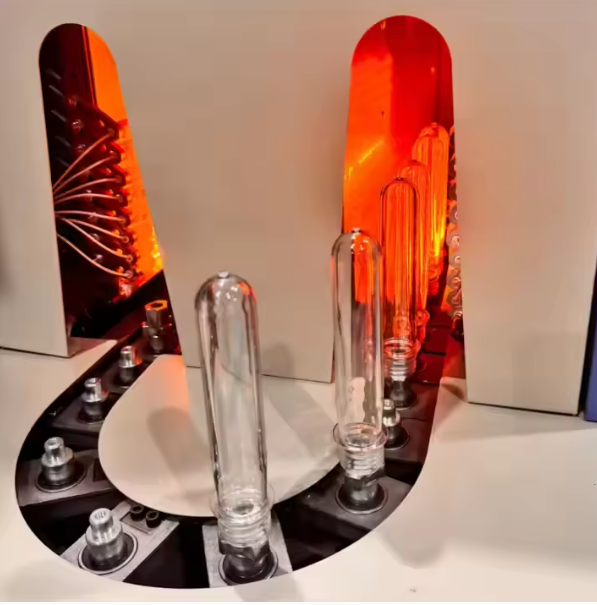
Ever pull a batch of PET bottles and notice some walls are thick while others are thin? Or worse, you find structural weak points that make the bottle feel flimsy? Usually, it’s because of “cold spots” in your preform. It’s a frustrating problem, and it almost always comes down to how the IR radiator maps its heat. That’s exactly why we built our 2500W Sidel-style IR lamps. We wanted to plug that gap and stop the guesswork. Why 2500W actually matters It’s not just about cranking up the power. It’s about how that heat actually hits the plastic. At 2500W, you get a concentrated burst of short-wave IR that sinks into the PET wall fast. We’ve built these tubes to handle high-voltage loads without the filament burning out early. The result? A tighter thermal footprint. Your preforms hit that glass transition temperature way faster, which keeps things moving. The secret is in the glass and the centering We use high-purity quartz glass. Why? Because we don’t want the tube absorbing the energy—we want that energy hitting the plastic. But here is the real trick: filament centering. If that filament is off by even a single millimeter, your entire heat field shifts. It’s a tiny detail, but it’s the difference between a perfect bottle and a scrap pile. We’ve tightened those tolerances to match—and often beat—the OEM specs. The heat hits the preform dead-on. Getting them installed These are simple drop-in replacements. You use your standard connectors, and they fit right into your existing Sidel or KHS oven footprints. No fuss. Just a heads-up, though. Pushing 2500W into a compact oven makes things hot—really hot—around the lamp sockets. If your cooling fans are clogged or just aren’t cutting it, you risk melting your wiring insulation. Keep your airflow clear. Your lamps will last longer, and your output will stay steady. It’s all about a balance between that high heat density and how well your machine can breathe out the waste heat.