When Your Deck Oven Bulbs Just Won’t Fit
Ever tried to find a replacement bulb for a deck oven only to realize the original manufacturer used some weird, proprietary size? It’s frustrating. You look for a standard R7s or SK15, but nothing fits. You’re stuck with a choice: spend a fortune retrofitting the whole oven, or find a bulb that actually fits the space you’ve got. That’s where we come in.
Getting the Power Right
Here’s the thing about voltage: it’s not just a number. A 230V tube and a 400V tube might look identical in length, but they throw heat very differently. If you go with higher voltage, you can pack more wattage into a thinner tube. This means your oven heats up faster. It’s great for speed, but it’s tougher on the quartz glass. You’ll want to make sure your controllers are dialed in, otherwise, you’re just asking for the filaments to burn out way too soon.
The Nitty-Gritty: Glass and Plugs
We use high-purity quartz. Why? Because it keeps the halogen cycle running smooth. It stops the tungsten from gunking up the glass, so the infrared heat keeps blasting through clearly. As for the ends, we can do whatever you need. Whether it’s a simple push-in R7s or a rugged SK15, we weld the leads so they don’t snap when things get hot and the metal expands. And if you’re working with sensitive products that scorch too easily? We can coat the tube. This shifts the heat from shortwave to medium-wave, so it penetrates deeper into the product instead of just searing the surface.
The Trade-off
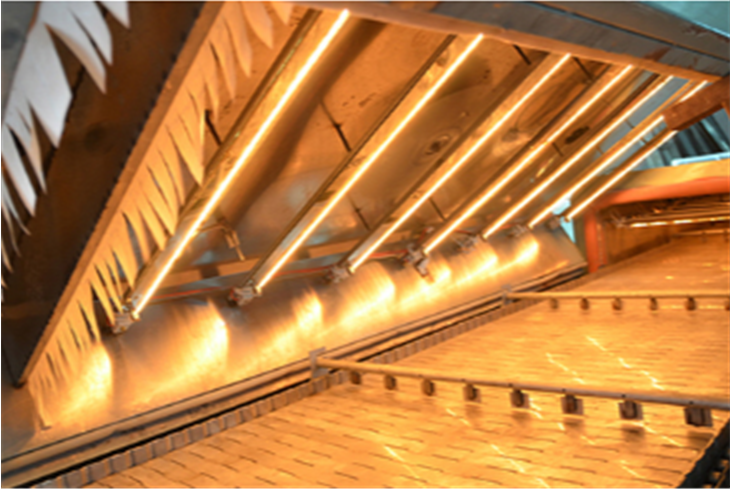
Custom lengths and wattages solve the “it doesn’t fit” problem, but they do change how your oven breathes. If we crank up the wattage to make a shorter tube do the work of a longer one, you’re creating a massive hotspot.Keep an eye on your ventilation. If the air around those sockets gets too stagnant and hot, the plastic housing will warp. We build the lamps to take the heat, but you’ve got to make sure the air is moving.